
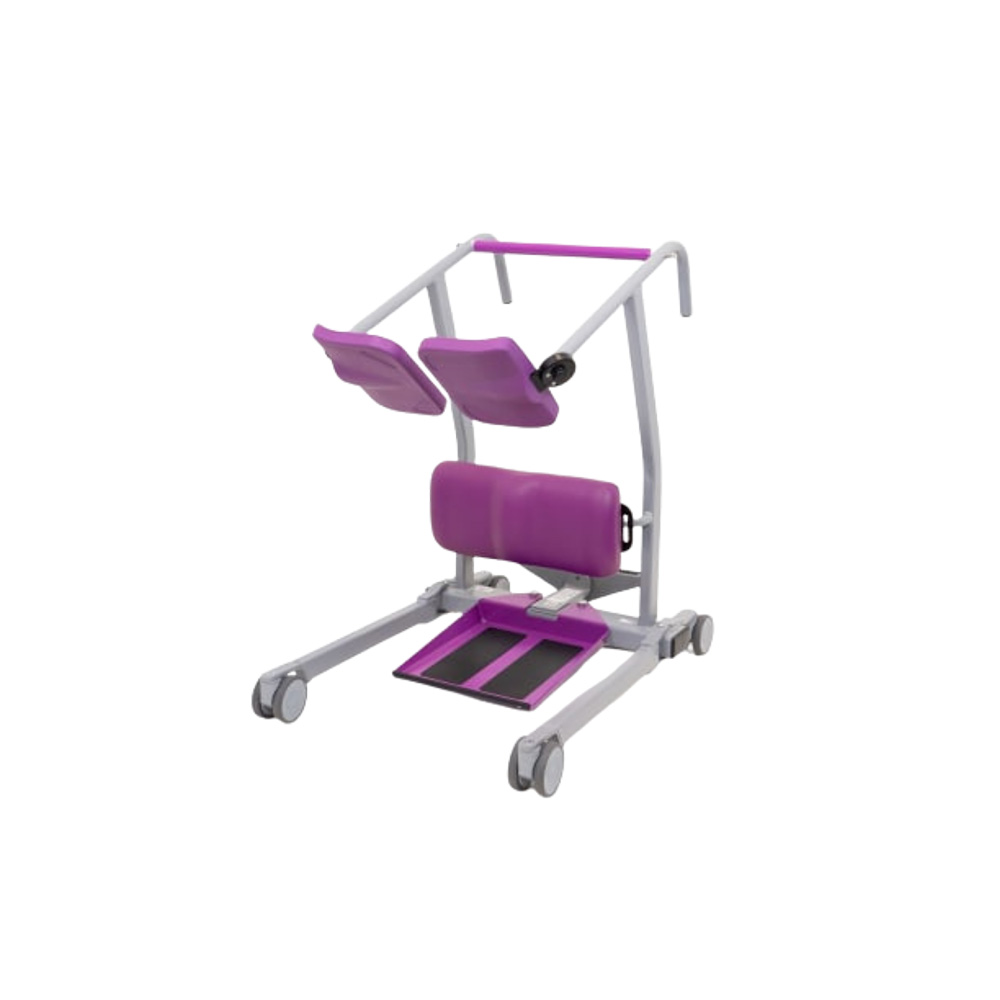
Mackworth TA180 Transfer Aid
The Prism Medical Freeway TA180 is a manual sit-to-stand transfer aid designed to support people with some existing mobility who require additional assistance due to reduced leg strength or balance. It encourages users to raise themselves from a seated position, helping facilitate transfers between beds, chairs and toilets without the need for a wheelchair over short distances. Its manually adjustable opening legs allow the unit to manoeuvre around furniture and obstacles, while braked rear castors provide stability during transfers. Padded knee supports and swivel seat pads help provide comfort and support once the user is standing. Available with standard or wide removable foot trays, the TA180 offers flexibility for different care environments and user requirements.

Features
- Manual sit-to-stand transfer aid
- Safe working load of 185 kg
- Manually opening and closing legs
- Braked rear castors for stability
- Padded knee support for user comfort
- Swivel seat pads that move into position once the user is standing
- Removable foot tray, available in standard or wide options
- Optional adjustable back support belt
- Turning circle of approximately 1,010 mm
- Overall height: 1,021 mm
- External width with legs open: up to 1,048 mm
- Manufactured in the United Kingdom
- Five-year warranty on metalwork, subject to terms and conditions
Benefits
- Encourages users to participate actively in standing and transfers
- Supports transfers between beds, chairs and toilets over short distances
- Helps reduce the need for wheelchair use during suitable indoor transfers
- Padded knee support provides additional comfort and stability
- Swivel seat pads provide support once the user has reached a standing position
- Braked rear castors help keep the unit stable during transfers
- Adjustable leg opening helps manoeuvre around furniture and obstacles
- Choice of foot trays provides flexibility for different seating arrangements
- Optional back support belt offers additional reassurance during transfers
- Design promotes eye contact and interaction between the user and carer
 United Kingdom
 Ireland