

Interventional Radiology Newsletter
Welcome to the Aquilant Interventional Radiology Newsletter! Keep up-to-date with the latest technology and innovation across GI Intervention, Oncology and Vascular therapy. Explore insightful case reports from leading clinicians across the UK.
IOUK 2025 – 19th – 20th June 2025
We are excited to be supporting this year’s BSIR IOUK Annual Meeting in London. This meeting provides fantastic learning opportunities for anyone with an interest in interventional oncology, with sessions hosted by national and international speakers it has proven to be a highlight in the Interventional Radiology calendar.
We will be demonstrating some of our products during the hands-on sessions including the Solero Microwave Ablation System from AngioDynamics.
Please make sure you visit the Aquilant stand in the exhibition area! There will be the latest technology in the Interventional Radiology world including the new Leinzett portable video cholangioscope, Solero microwave ablation system, the comprehensive and diverse range of GI and HPB metal stents from TaeWoong as well as the ELRA biliary radiofrequency ablation system.


For more information, email Aquilant.newsletter@hc21.group or visit healthcare21.eu
Treatment of a distal malignant oesophageal stricture using a Niti-S covered oesophageal stent
At Guy’s and St Thomas’ NHS Foundation Trust we use the Niti-S Oesophageal stent as part of our tool kit in treating oesophageal malignancy. This double layered covered stent and its anti-migration technology allows us to treat a range of oesophageal strictures confidently.
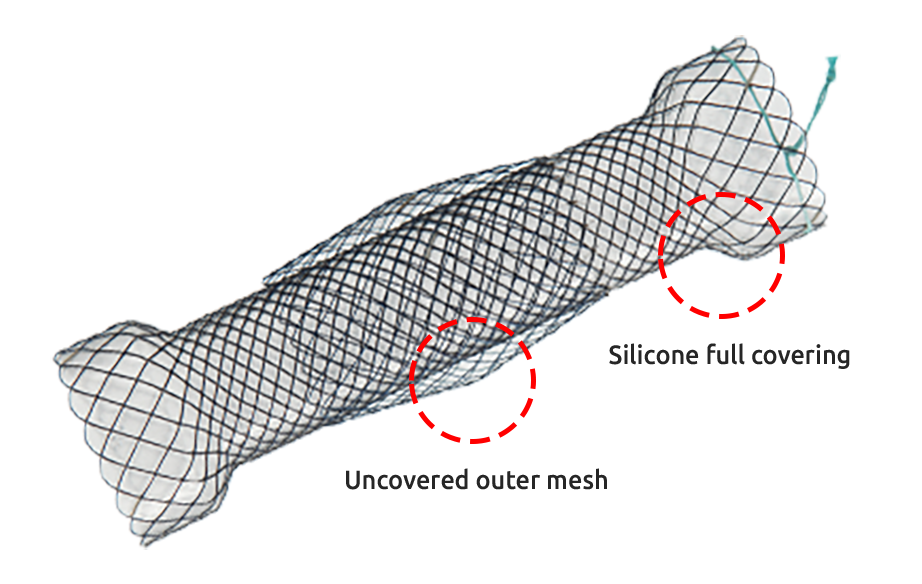
Image 1
Indications:
The Niti-S oesophageal Stent (Image 1) is intended for use in oesophageal strictures caused by intrinsic and/or extrinsic malignant tumours.
Key features:
- The stent has a fixed cell with braided construction offering high flexibility and optimal radial force.
- Proximal and distal head ends (8mm larger than trunk) to minimize migration
- Double-layered design: an inner polyurethane layer to prevent tumour ingrowth and an outer uncovered nitinol wire tube to allow the mesh of the stent to embed itself in the oesophageal wall.
- 10 radiopaque markers in three locations –four proximal, two middle and four distal – allowing for accurate deployment and ensuring adequate lesion coverage.
Case presentation:
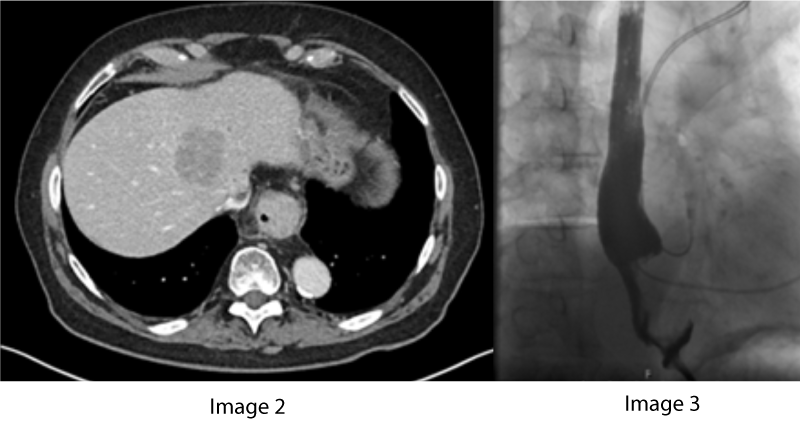
A 77-year-old gentleman presented with progressive dysphagia. This was on a background history of Barrett’s oesophagus and ischaemic heart disease. A contrast enhanced CT of the thorax, abdomen and pelvis revealed a 6 cm obstructing distal oesophageal mass lesion extending to the gastro-oesophageal junction (GOJ) with hepatic metastases (Image 2). A fine needle aspirate from oesophagogastroduodenoscopy (OGD) yielded a diagnosis of moderately differentiated adenocarcinoma with a provisional staging of T3N1M1.
He commenced palliative chemotherapy with a mixed response, but represented with progression of the primary lesion causing obstructive symptoms. A contrast swallow study revealed high grade stenosis of the distal oesophagus at the level of the known mass lesion (Image 3).
Procedure:
The patient was referred to interventional radiology for oesophageal stenting. The case was performed under general anaesthetic with transoral cannulation of the stomach and placement of a guidewire in the duodenum.
A 5 french long sheath was inserted, through which a pullback oesophagogram was performed to identified the lesion and plan stent size, and placement (Image 4).
An 18 french 18 mm x 120 mm covered stent was loaded over the wire and advanced to the distal oesophagus where it was deployed without complication (Image 5).
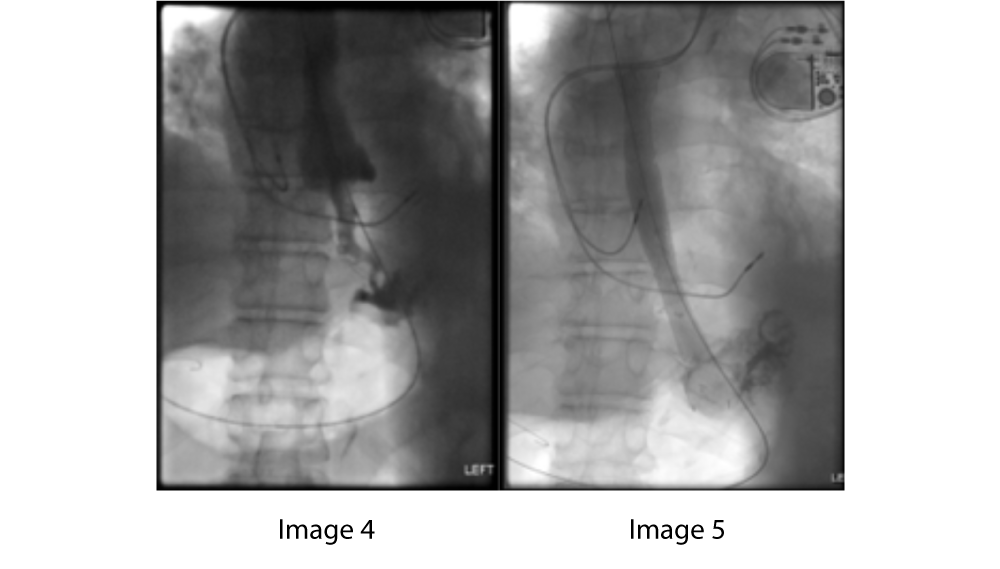
Balloon dilatation was performed in the midportion of the stent, at the site of known malignant stenosis.
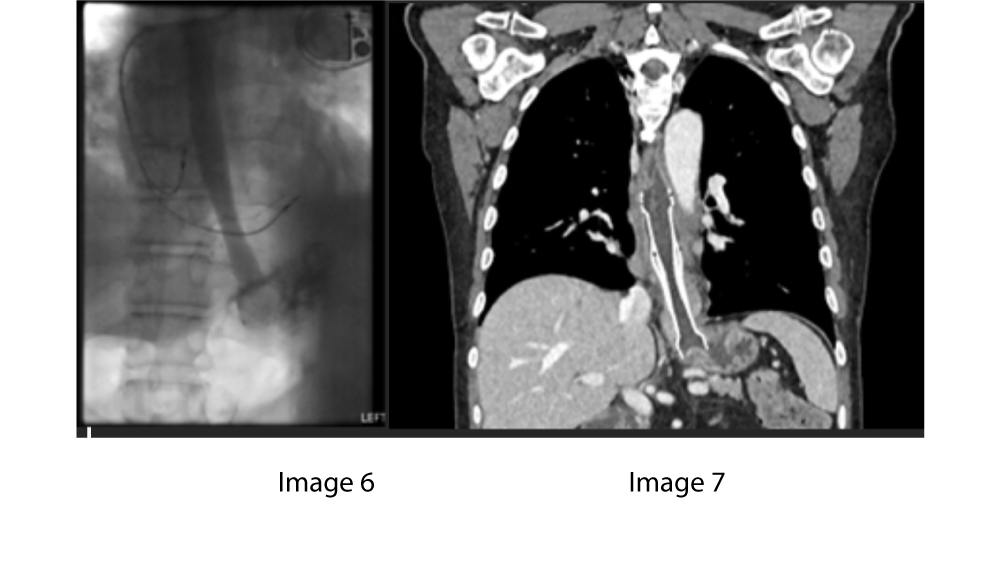
An oesophagogram performed thereafter demonstrated appropriate positioning and patency of the stent (Image 6).
Two months later a follow-up CT demonstrates that the stent remains widely patent and well positioned (Image 7). The features minimising stent migration; the double layer, along with the proximal and distal end heads of the stent, can be well seen on this CT.
For more information, email Aquilant.newsletter@hc21.group or visit healthcare21.eu

Simple. Speedy. Scalable.
The Solero* Microwave Tissue Ablation (MTA) System and Accessories are indicated for the ablation of soft tissue. The Solero MTA System is unique because it is specially designed to complete up to a 5 cm ablation in 6 minutes at max power output using a single applicator*.
*Ex-vivo bovine liver – actual clinical result in perfused tissues may differ.
For more information, email Aquilant.newsletter@hc21.group or visit healthcare21.eu

For more information, email Aquilant.newsletter@hc21.group or visit healthcare21.eu

For more information, email Aquilant.newsletter@hc21.group or visit healthcare21.eu
More than just another Atherectomy system
The Auryon Atherectomy system is a 355nm Laser that has the capability to break through calcium, aspirate clot and deliver lithotripsy effects (as demonstrated in the Micro CT study) to address medial arterial calcification. In addition, the 2.0 and 2.35mm fibres are indicated for in stent restenosis. It’s clear that Auryon is not just another atherectomy device but more of a vessel preparation system that is tailored to assist our doctors in treating some of their more complex patients.
Indications:
Auryon is indicated to treat Peripheral Arterial Disease below the level of the inguinal ligament and In Stent Restenosis* (ISR).
Key Benefits:
- Clear all lesion types, including ISR*, with one single device.
- Revolutionize how you treat, above and below the knee.
- Practice with confidence by minimising the risk of embolisation.
*Only the 2.0 & 2.35mm catheters are indicated for ISR.
For more information, email Aquilant.newsletter@hc21.group or visit healthcare21.eu

For more information, email Aquilant.newsletter@hc21.group or visit healthcare21.eu
New opportunities in cholangioscopy
Latest technology in video cholangioscopy is now available in the UK.
The Leinzett cholangioscope offers:
• High quality image – 160,000 pixels
• LED light source
• 6F, 4.8F and 3.6F working channels available
• 4 way and 2 way angulation
• No capital commitment required
• Portable

For more information, email Aquilant.newsletter@hc21.group or visit healthcare21.eu
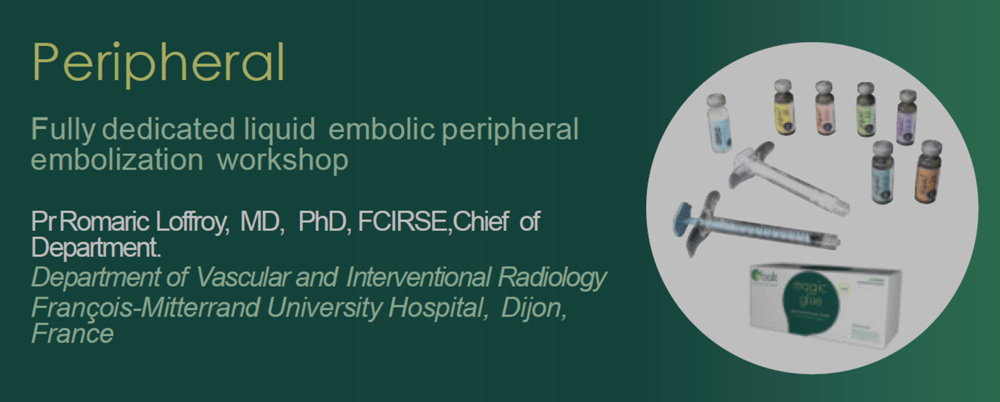
Exceptional learning opportunities at the Liquid Embolic Peripheral Embolisation Workshop
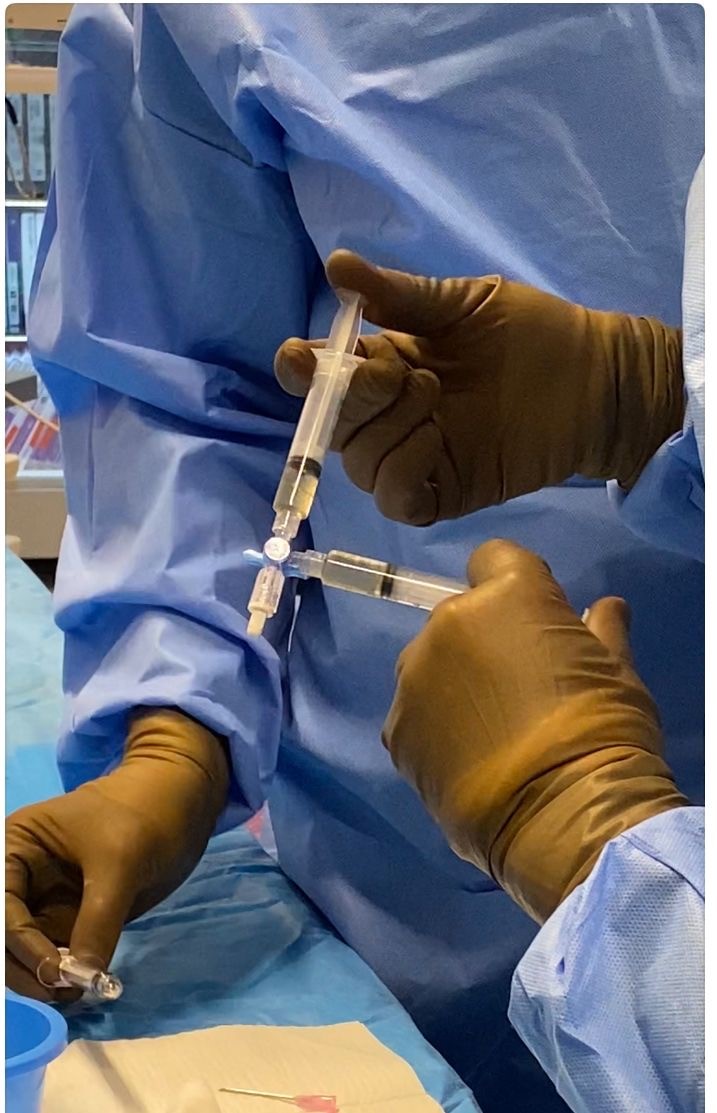
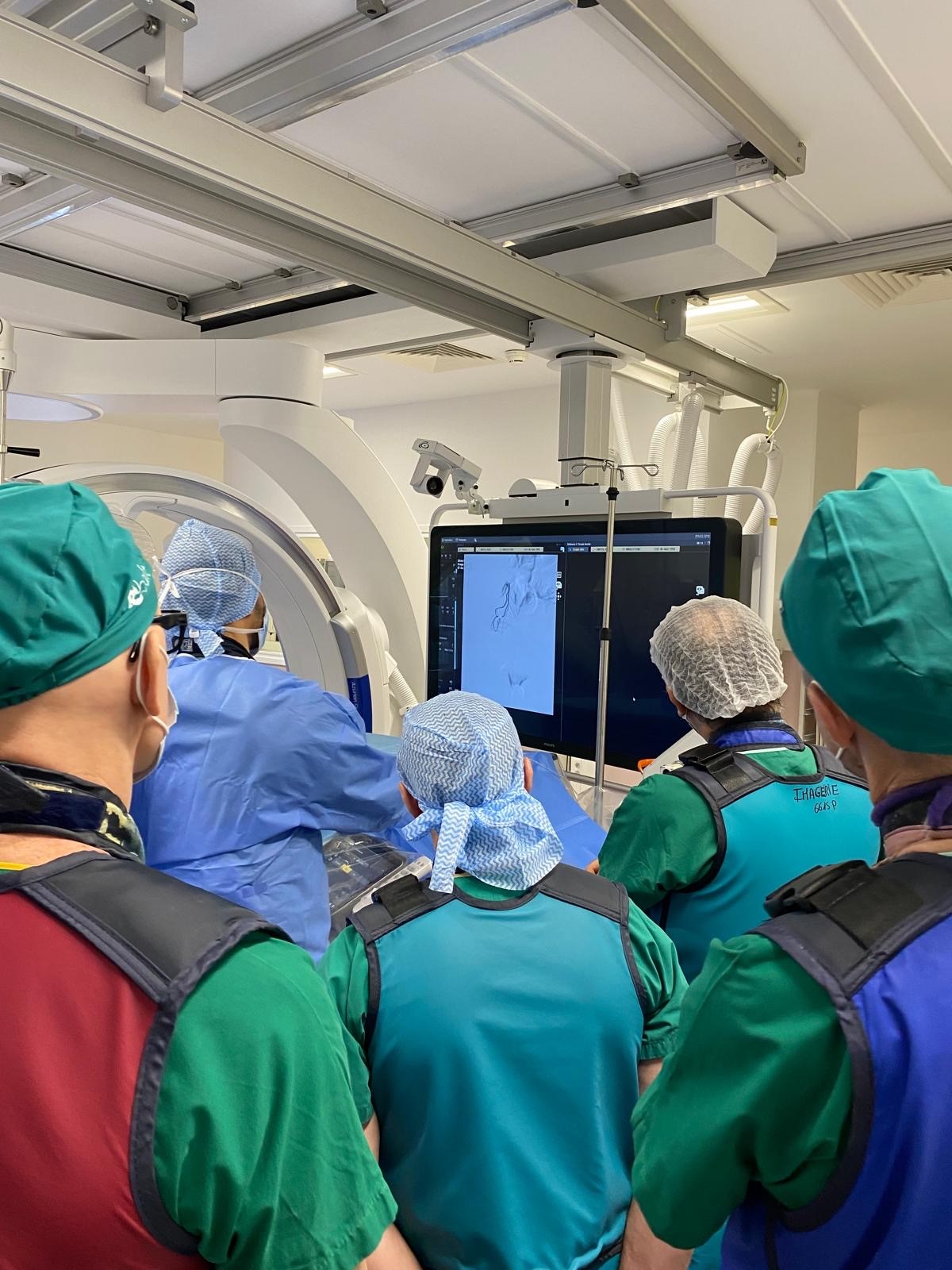
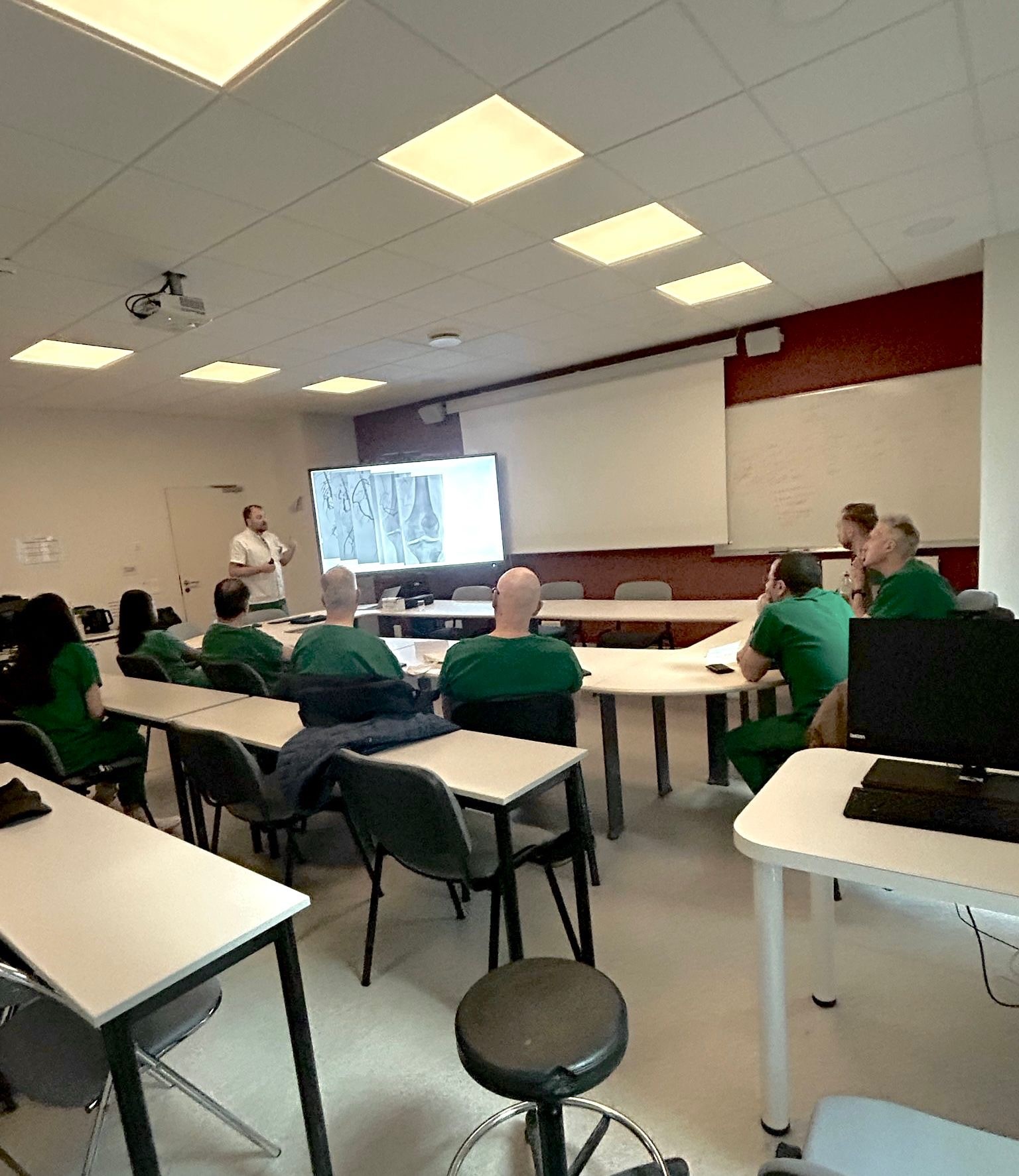
The Liquid Embolic Peripheral Embolisation Workshop, held at the François-Mitterrand University Hospital in Dijon, offers a unique and invaluable opportunity for consultants looking to deepen their expertise and build confidence in the use of liquid embolic agents. This highly regarded, interactive workshop is designed to be concise yet comprehensive. It is conducted in an intimate setting and begins with a focused theoretical session led by Professor Romaric Loffroy, a recognised expert in the field. Consultants gain an in-depth understanding of glue and EVOH as Prof. Loffroy shares his extensive experience, practical insights and answers to all clinical questions.
Following this, physicians observe live cases and gain hands-on experience with Prof. Loffroy and his team as he shares tips and his knowledge on the concept of liquids. The April workshop demonstrated procedures such as varicocele embolisation, prostatic artery embolisation, and pelvic congestion syndrome (PCS). These cases were performed using products such as Magic glue, SquidPeri and Prestige detachable coils tailored to each clinical need. This sought-after workshop combines theoretical knowledge with practical exposure, empowering consultants with the knowledge, skills, and confidence to effectively utilise liquid embolics.
For more information, email Aquilant.newsletter@hc21.group or visit healthcare21.eu
Upcoming events

CIRSE
13th – 17th September 2025 – Barcelona
Lower Limb Endovascular Symposium
9th – 10th October 2025 – Manchester
BSIR Annual Scientific Meeting
11th – 13th November 2025 – Liverpool
Ablation Study Day
3rd December 2025 – London
For more information, email Aquilant.newsletter@hc21.group or visit healthcare21.eu